
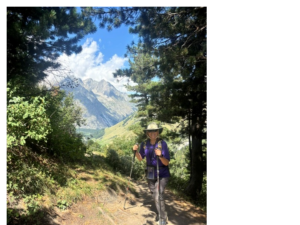
When you’re climbing a mountain for hours, your world can become very small. Boot. Rock. Step. Boot. Rock. Step. Your calf muscles ache. Your breathing gets heavier. The trail continues upward, seemingly without end. On the Tour du Mont Blanc (TMB), there were plenty of moments when I found myself focused almost entirely on the few feet of trail directly in front of me. Then we would stop.
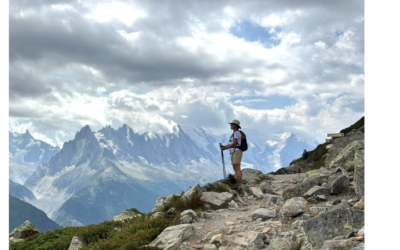
Sometimes the pause was intentional. Other times an extraordinary view demanded it. When we wanted to admire the scenery, we learned to come to a complete stop. It was the only safe choice! Looking around while also navigating rocks and roots was a good way to end up somewhere other than on your feet. And almost every time we stopped and looked back, Alison and I had the same reaction. Wow. Look how far we’ve come.
From our new vantage point, we could see the valley far below us and trace portions of the trail we just climbed. Our starting point in the valley was now far below us in the distance. Looking ahead provided a different perspective. The pass was closer. The refugio was visible. The next landmark suddenly seemed attainable. Then we would take a drink of water, enjoy the view for another moment, and start walking again. Leaders need those pauses, too.
When we’re immersed in a major project, organizational change, challenging client assignment, or demanding strategic goal, it’s easy to spend all our time looking at the next task.
- What needs to happen today?
- What problem needs to be solved?
- What’s late?
- Who’s waiting for a decision?
That focus is necessary. Work gets accomplished through execution. But relentless execution without reflection has a cost. Periodically, leaders need to stop moving long enough to look around and ask:
- Where did we start?
- What have we accomplished?
- What have we learned?
- What looks different from here than it did six months ago?
- And importantly: Are we still headed in the right direction?
Sometimes the pause confirms that the original goal remains exactly right. Sometimes your new vantage point reveals something you couldn’t have seen when you began. The pause also gives us an opportunity to recognize progress.
Teams working toward ambitious goals can become discouraged because their attention is naturally drawn toward everything that remains unfinished. Leaders can help by occasionally turning everyone around and saying, in effect, “Look at the valley below us. That’s where we started.” Recognition doesn’t require a major celebration. It may simply mean acknowledging a milestone, sharing what the team has learned, recognizing someone’s contribution, or reminding everyone how much has changed.
Years ago, Coca-Cola used the phrase “the pause that refreshes.” I like that idea. Sometimes the most productive thing a leader can do is stop climbing for a moment, look up and out, appreciate the view, and gain a fresh perspective on the journey. Then start walking again.


0 Comments